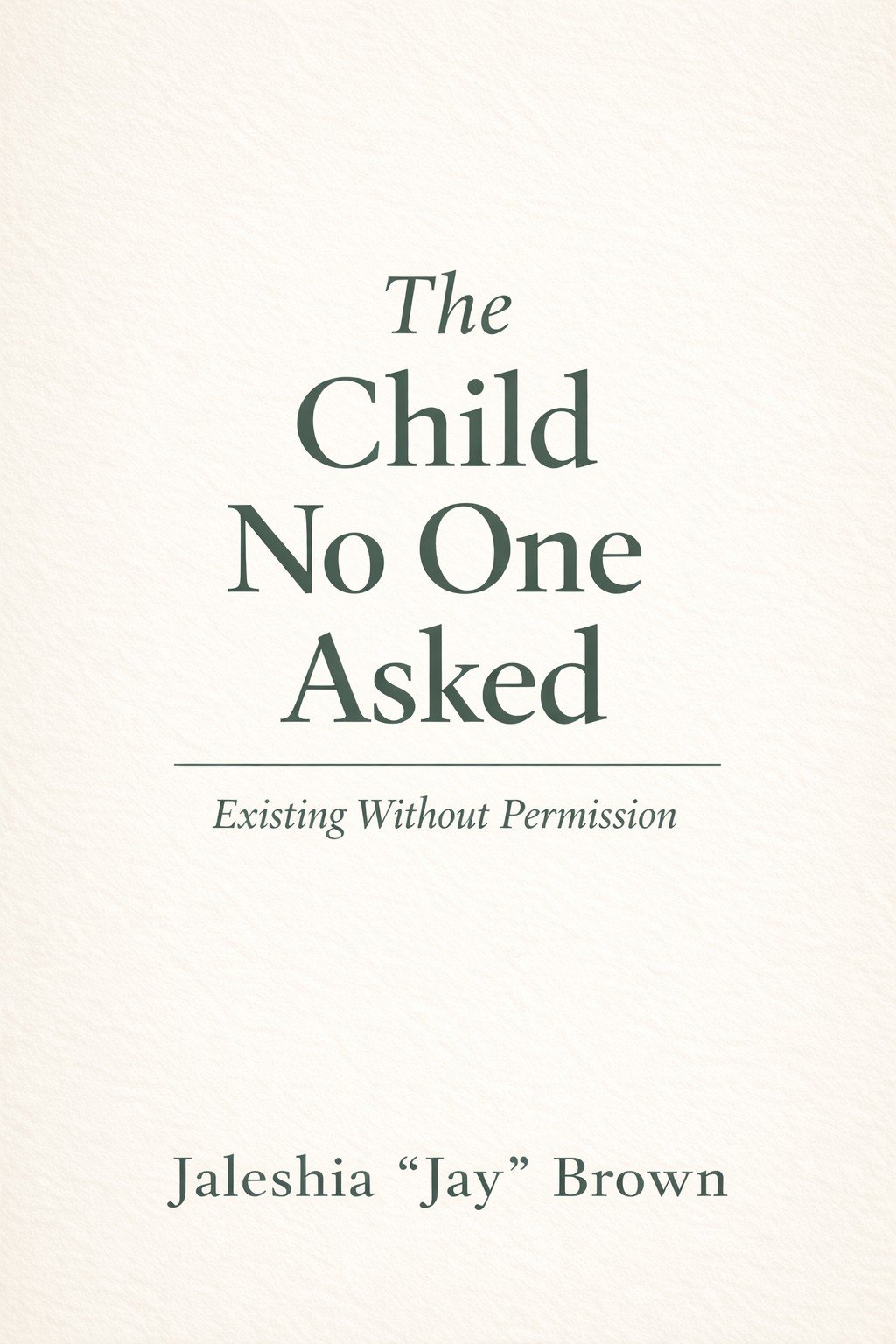
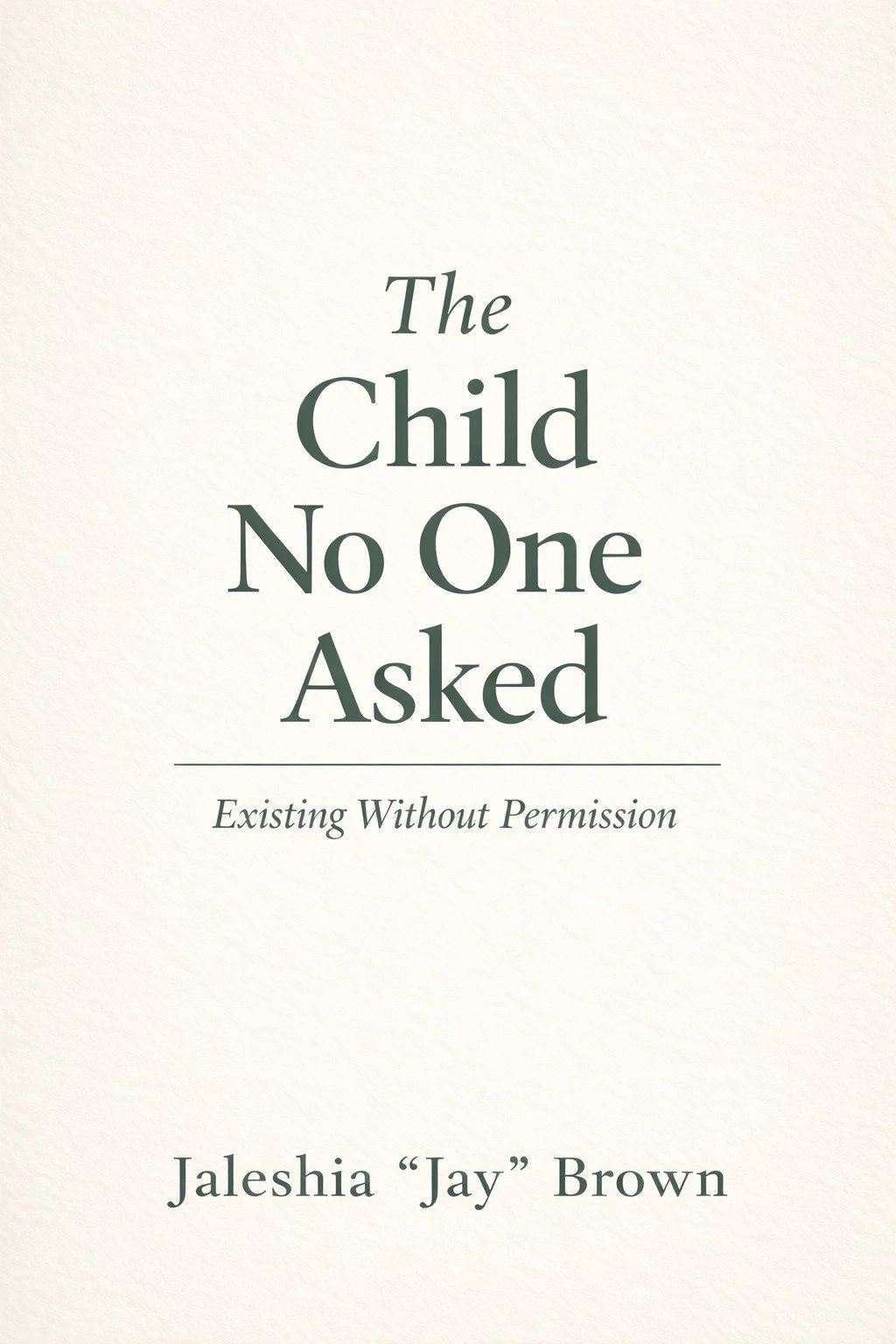
The Child No One Asked: Existing Without Permission
By: Jaleshia “Jay” Brown
What happens when a child learns to survive—but never learns they’re allowed to exist?
A reflective narrative exploring identity, survival, systems, belonging, and self-definition through the lens of lived experience.
About the Book
The Child No One Asked: Existing Without Permission is a reflective narrative about growing up inside systems that shape identity without always understanding it.
Through lived experience, Jaleshia “Jay” Brown traces the often unseen ways instability, foster care, school systems, relationships, and survival adaptation influence how young people learn to move through the world—hyperaware, adaptable, protective, and always prepared to leave.
This is not a story of resilience in the way it is often celebrated. It is a story about survival, identity, belonging, emotional adaptation, and the quiet ways environments shape what people come to believe about themselves.
As the story unfolds, patterns once necessary for survival begin surfacing in adulthood—in relationships, self-worth, leadership, parenting, and healing. Through reflection, accountability, motherhood, sobriety, faith, and self-examination, Brown begins reclaiming a sense of self beyond the environments that shaped her.
Rather than offering simple answers, the book invites readers to reflect more deeply on how safety is experienced, not just intended—and what responsibility systems and the adults within them carry in shaping the lives of young people.
Themes Explored
Identity & self-definition
Foster care & institutional impact
Survival adaptation
Safety & belonging
Relationships & self-worth
Silence, voice, & agency
Mental health & healing
Parenting & generational patterns
Faith, reflection, & restoration
Lived experience as insight
From Reflection to System Practice
While deeply personal, The Child No One Asked also raises broader questions about safety, belonging, institutional response, adaptation, and the long-term impact of environments that prioritize management over understanding.
Throughout the book, Brown reflects on experiences within foster care, education, mental health, and justice systems—not simply to revisit the past, but to examine how environments, expectations, and power dynamics shape behavior, identity, and participation over time.
These reflections continue to inform the work of Virtue Visionary LLC, where lived experience is treated not as symbolic representation, but as valuable insight capable of strengthening systems, relationships, and decision-making.
The book is not positioned as a framework or policy manual. Instead, it serves as an invitation—to listen differently, lead more thoughtfully, and consider what becomes possible when people are understood beyond their behavior or circumstances.
Selected Reflection
About the Author
Jaleshia “Jay” Brown is a writer, systems-change practitioner, and founder of Virtue Visionary LLC, an initiative focused on bridging lived experience with systems-level change.
Her work centers youth governance, institutional reflection, and the development of structures that move beyond symbolic inclusion toward meaningful participation and shared decision-making.
Drawing from both lived experience and professional leadership experience, Jay works alongside organizations, educators, advocates, and public systems to strengthen how institutions listen, respond, and design with the people most impacted by their decisions.
Through both writing and systems work, she challenges the assumption that lived experience is merely personal history—positioning it instead as a valuable source of insight capable of strengthening relationships, policy, and practice.
Closing Reflection
“You are not difficult.
You are not a problem to be managed.
You are powerful.”