This model is designed to move youth voice from feedback to function, where lived experience directly informs decisions, structures, and system accountability.
Real examples of how youth insight, when structured through governance and collaboration, can lead to measurable systems change.Turning Youth Insight into Systems Change
The Virtue Visionary Youth-Led Systems Change Model was developed through real implementation within youth governance spaces and cross-system collaboration.
Across these initiatives, youth leaders and partners identified system barriers, analyzed root causes, coordinated stakeholders across agencies, and supported the development of structural solutions.
The examples below demonstrate how youth insight can move beyond consultation to influence policy, practice, and operational systems. The case studies reflect initiatives advanced through youth leadership and cross-system collaboration during leadership with the Youth Advisory Board in Hamilton County and related partnerships.
These case studies are presented to illustrate the application of youth-led systems change in practice.
They do not represent official endorsements by partner organizations and are shared for educational and illustrative purposes.
Youth-Led Systems Change Model in Practice
What This Looks Like in Practice:
Youth are positioned within decision-making structures, not outside of them
Roles, expectations, and accountability are clearly defined for youth and adults
Youth insights directly informs policy, practice, and system improvements
Systems are designed to sustain engagement, not rely on one-time input.
The Pattern Behind the Outcomes
Across each case study, the same systems change cycle emerged:
1. Youth Insight
Lived experience identified barriers within existing systems.
2. Systems Analysis
Youth leaders and partners examined policies, processes, and structural gaps contributing to the problem.
3. Cross-System Collaboration
Stakeholders across agencies, institutions, and sectors coordinated to address the issue.
4. Structural Change
Systems adopted new processes, resources, or practices that improved outcomes for youth.
This pattern forms the foundation of the Virtue Visionary Youth-Led Systems Change Model.
Impact in Practice
The examples below illustrate how youth insight, when structured through governance and collaboration can influence decision-making, accountability, and system design.
Click each case study to explore how this work has been applied in practice.
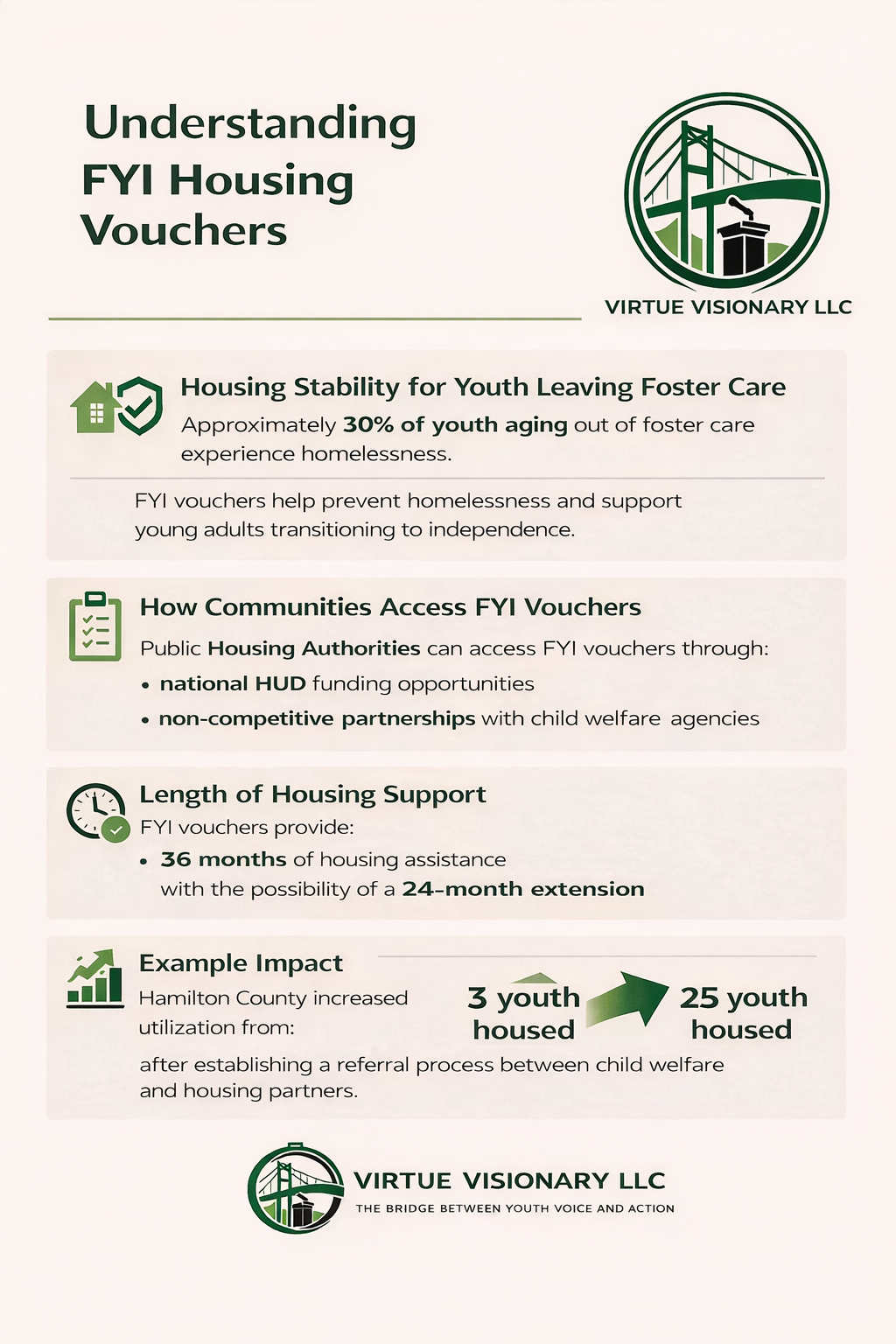
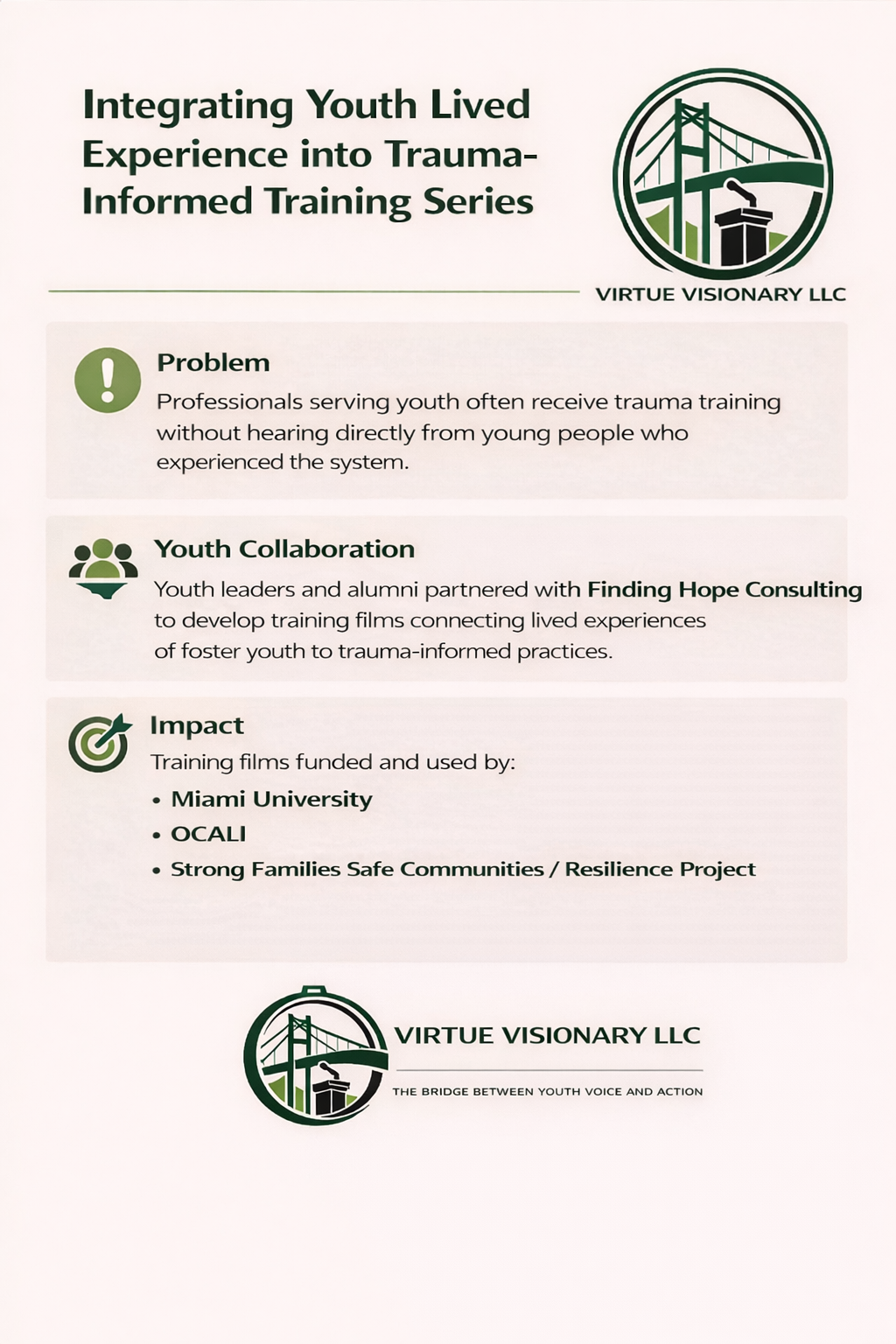
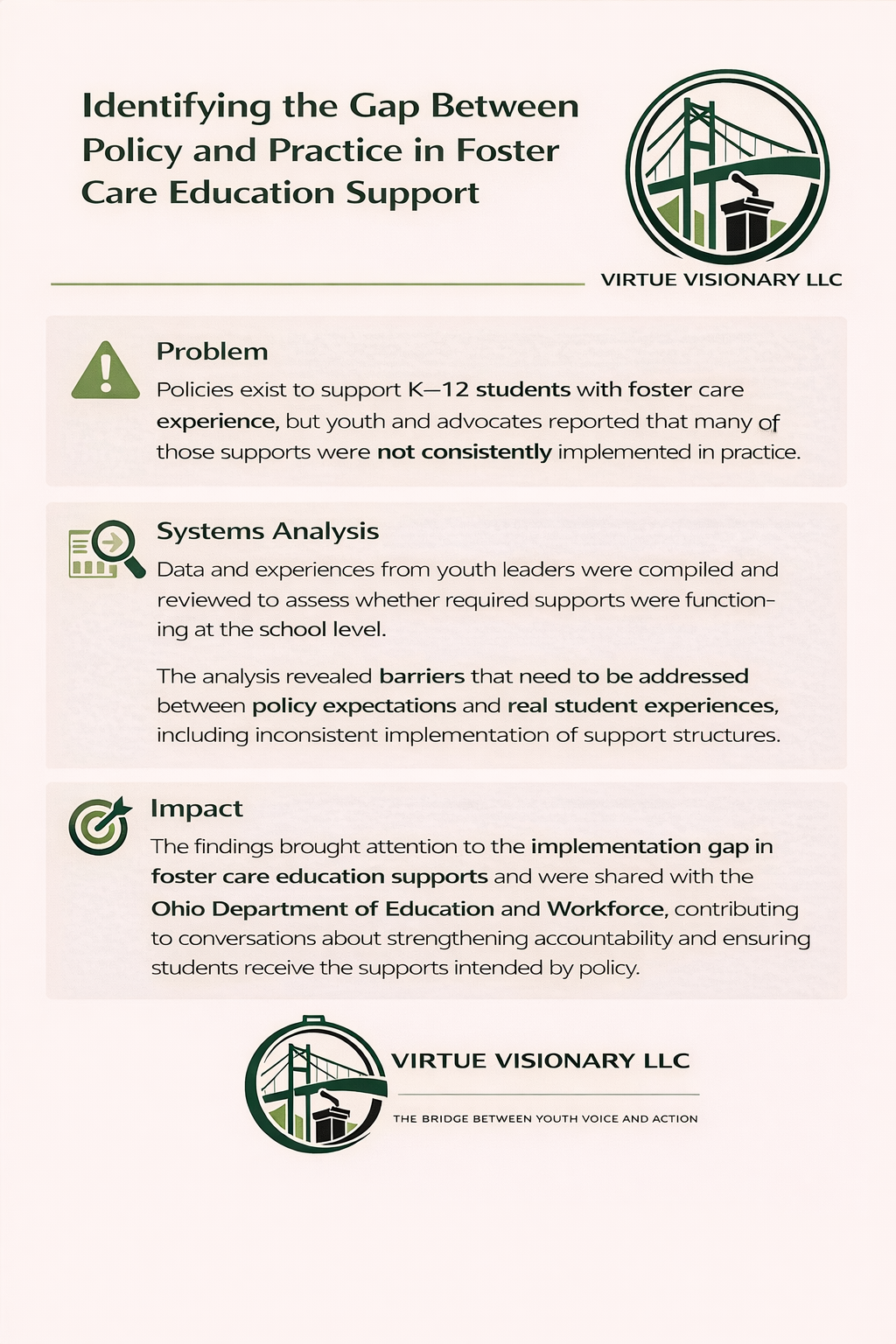
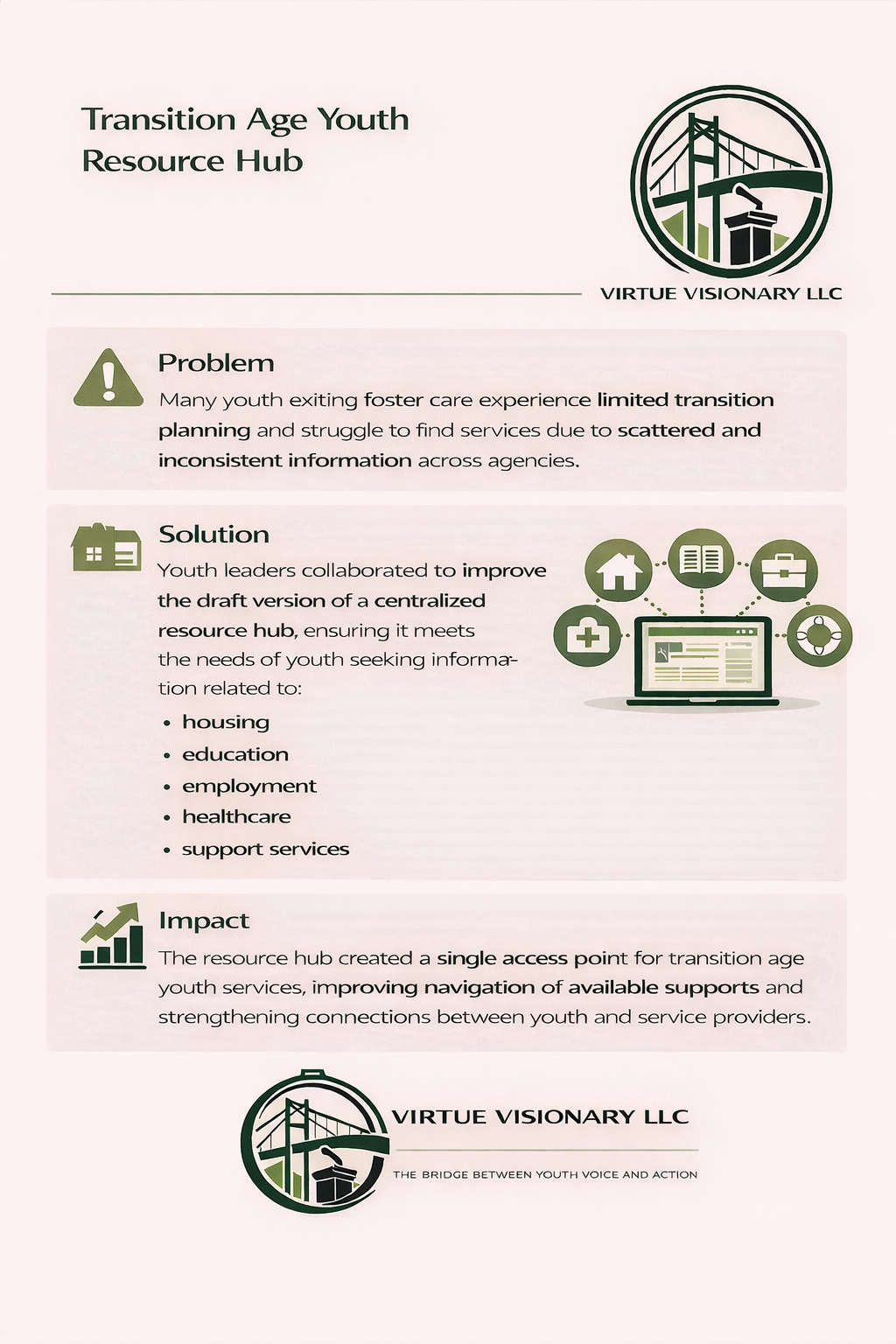
Insights From Practice
Real systems change doesn’t happen through models alone. It happens through practice, reflection, and listening to the people most affected by the systems we’re trying to improve.
Through youth governance work, youth advisory boards, and system design efforts, we’ve learned powerful lessons about power, participation, and what meaningful engagement truly requires.
These insights include reflections from youth leaders, lessons from implementation, and emerging ideas about how systems can better integrate lived experience into leadership and decision-making.