Seen, Heard, and Taken Seriously: A Reflection on Belonging, Leadership, and Real Voice
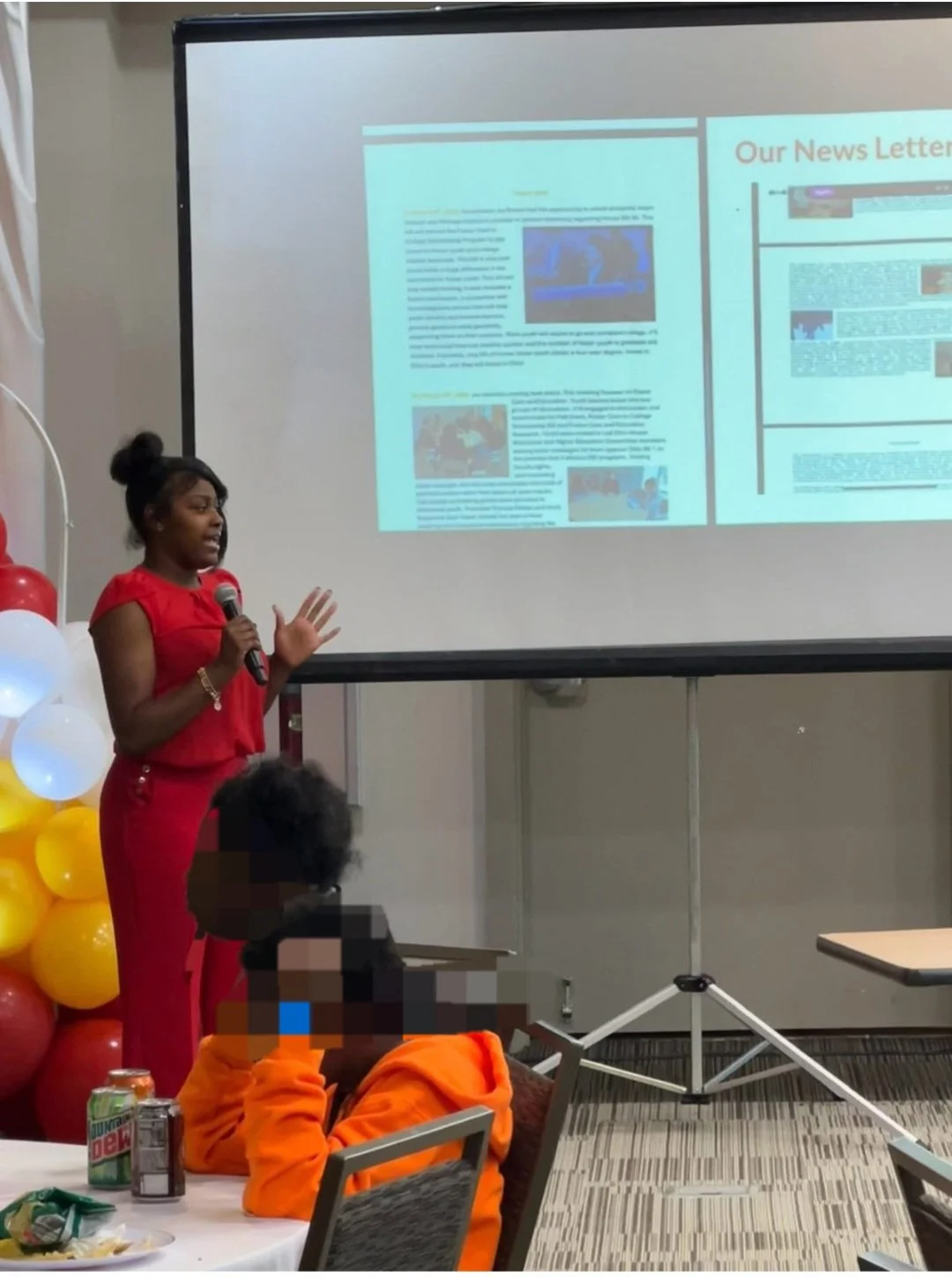
This reflection is shared with permission and represents one youth’s lived experience. Virtue Visionary exists to protect spaces where youth can speak honestly, be seen fully, and engage in advocacy without fear of being minimized or tokenized.
“My name is Alana Johnson, and I am currently an advocate at YWCA of Greater Cincinnati. I am sharing my honest reflection, lived experience, and advocacy regarding my time as a member of [this advocacy community].
I joined [this advocacy community] at 18 years old and am now 20 years old, meaning I have been part of [this advocacy community] for the past two years. I want to be clear that I served only as a member, not in a formal leadership role, yet the impact the had on my life was profound and life-altering.
Before joining [this advocacy community], I truly did not know what I wanted to do with my life. I felt doomed, stuck, and limited. I believed my future would consist of working at Panera Bread, making coffees and salads, just trying to survive. [Jay Brown] showed me that life could be bigger—that I could push harder, dream bigger, and “catch a bigger fish.” She helped me understand that I was not limited by my past or my circumstances.
I have been in foster care since I was 12 years old, and I am still actively in foster care at age 20. [Jay] never once made me feel less important because I was no longer a minor. She understood that foster care does not magically stop impacting you once you turn 18. She continued to see me, support me, and value my voice. [As structures and leadership shifted, I no longer felt that same level of respect.] My age became more important than my lived experience, and my continued status as a foster youth felt overlooked. [This shift contributed to my decision to step back from engagement as the space evolved.]
[This advocacy community] was more than meetings—it was therapy for me. It helped me process and heal from deep childhood trauma, including trauma related to my parents. I felt safe enough to share that my mother struggled with addiction, and instead of judgment, I was met with compassion, guidance, and support. That kind of trust does not happen easily for foster youth. [This advocacy community] gave me a space where healing was possible.
Ms. Jay Brown and Ms. Lisa Dickson became my role models. Watching their leadership, dedication, and advocacy inspired me to believe in myself. They reminded me—consistently—that my voice deserves to be heard no matter my age, background, or circumstances. Their leadership encouraged me to go back to my former foster group home to speak to the foster youth about [this advocacy community], that was paid, that valued them and their lived experience.
[This advocacy space] became my family and my friends. The Thanksgiving and Christmas dinners meant everything to me. Without those gatherings, I would have been home alone, grieving the lack of family and community in my life. Those moments mattered more than people may ever realize.
Walking into [institutional spaces connected to the work] often made me feel like an outsider. I am being honest, because honesty was always encouraged. However, [the advocacy community] transformed those spaces into something safe, inclusive, and meaningful. The outings, shared laughter, and intentional care quite literally pulled me out of depression.
There were times when my depression was so heavy that getting out of bed felt impossible. Yet I would attend [the advocacy] meetings and leave feeling empowered. [Jay] noticed when something wasn’t right. She knew my personality—she knew I’m a certified yapper—so when I was quiet, she noticed. She asked me what was wrong. Even when I didn’t answer, the fact that she asked told me everything: I mattered. I wasn’t just a participant. I was seen.
One of the most powerful experiences of my life was being able to speak face-to-face with state senators—for them to see our faces, hear our stories, and witness our truth. Being able to advocate directly, to ask for help, and to be taken seriously changed me forever.
The road trips to Columbus—the note-taking, snack passing, naps, and nonstop yapping—those memories will always stay with me.
[As the space changed, it began to feel less accessible and less community-centered.] What once felt alive and supportive no longer felt the same to me.
[This advocacy community] helped shape who I am today. It inspired me to pursue advocacy professionally, and I am now a certified professional advocate. I would not be where I am without this experience.
I want to sincerely thank the [advocacy] community, Ms. Jay Brown, and Ms. Lisa Dickson. They are intentional, thoughtful leaders who ensured that every youth felt seen and valued. No matter how many youth were served, each of us felt important.
This is my truth.
This is my insight.
And this is my advocacy”.
